Ceramic production in the Czech lands has remained closely tied to regional geology. Two primary clay-bearing zones have historically supplied workshops: the Cretaceous sedimentary beds of western Bohemia around Karlovy Vary, which yield a fine-grained white-firing kaolin-rich clay, and the Jurassic clays of south Moravia near Kyjov and Strážnice, which produce the red-burning earthenware that characterises Moravian folk pottery.
Most small workshops today still source clay locally when possible, blending local material with commercially processed additions to achieve consistent plasticity and shrinkage rates. Understanding the behaviour of natural clay before and after firing is central to the process.
Clay Characterisation and Preparation
Raw clay dug from the ground contains organic matter, soluble salts, and irregularly sized particles. Before it can be worked, it requires preparation:
- Weathering: fresh-dug clay is left exposed to frost and rain through at least one winter. Freeze-thaw cycles break down clods and improve plasticity by aligning clay platelets more evenly.
- Slaking and screening: weathered clay is dissolved in water, passed through a mesh to remove stones and coarse particles, then allowed to settle and dry to a workable consistency in shallow plaster bats.
- Wedging: dried-down plastic clay is cut and compressed repeatedly on a plaster-topped bench to eliminate air pockets and achieve uniform density throughout the mass. Czech potters traditionally use the ram's head wedging motion — a rhythmic forward-pressing and folding technique — for 15–20 minutes per kilogram of clay.
Shrinkage from wet to bone-dry averages 8–12% for Moravian earthenware clays; total fired shrinkage (wet to fired) reaches 12–18% depending on firing temperature.
Wheel Throwing
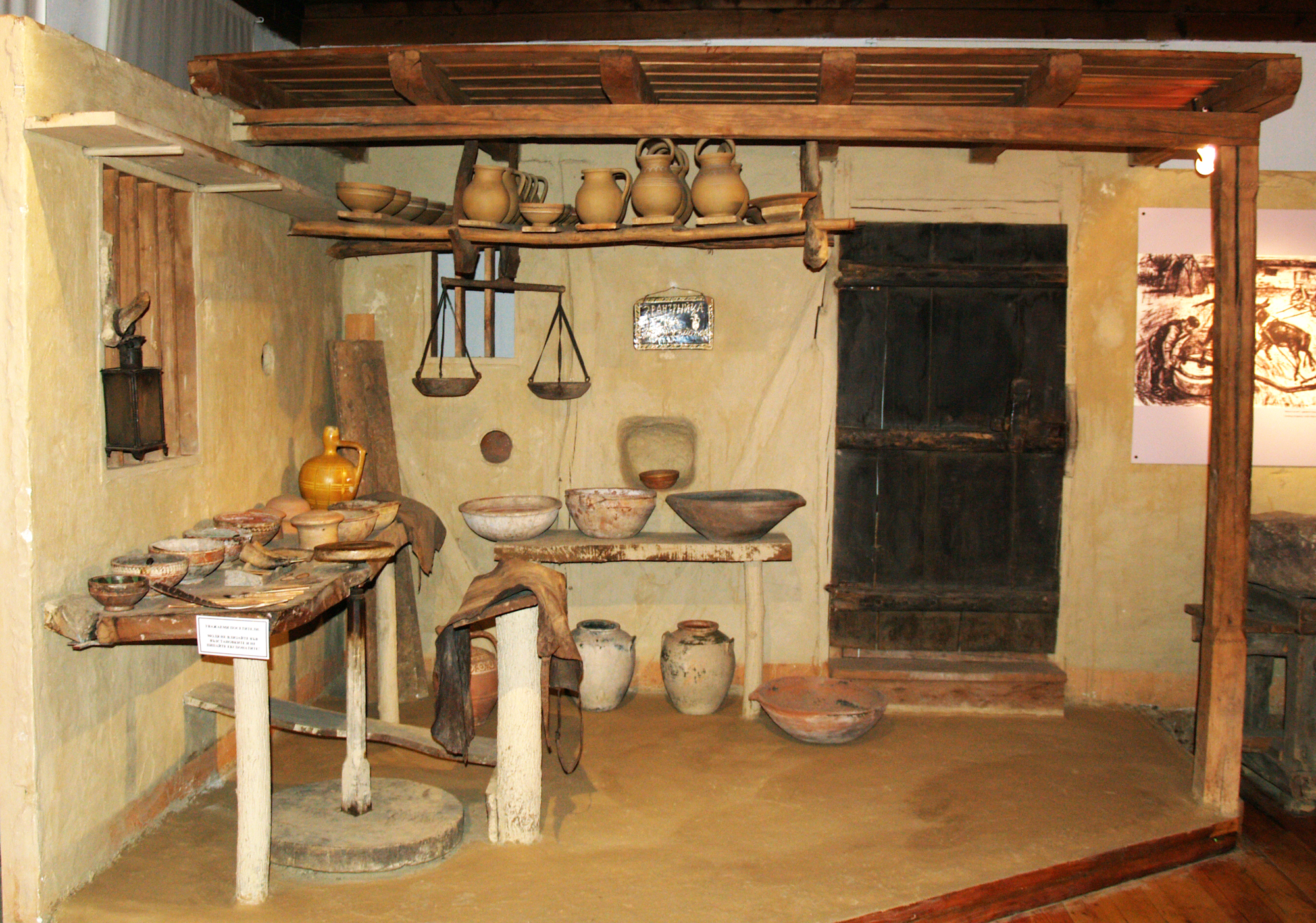
The kick wheel — a heavy flywheel driven by foot — remains standard equipment in traditional Czech workshops, though electric wheels are used in some contemporary studios. The technique for centring and opening is not fundamentally different from that documented in 19th-century pottery manuals, but Czech practice emphasises:
- Keeping hands wet with thin slip rather than water alone, to reduce drag on the clay surface without oversaturating the wall.
- Compressing the base thoroughly in each opening and pulling stage to reduce S-crack failure during drying.
- For larger forms above 2 kg, throwing in two stages — base cylinder first, collar added once the first stage has stiffened for 2–4 hours.
Traditional Moravian jug forms feature a pronounced shoulder, a narrow neck, and a pulled handle that attaches at the rim and just above the belly. The strap handle is pulled from a cone of clay, thinned to uniform cross-section, then curved onto the form and scored at both attachment points.
Surface Decoration: Slip and Engobe
Moravian folk pottery is particularly known for its slip-decorated earthenware. Coloured slips — clay suspensions tinted with metal oxides — are applied to leatherhard work by trailing, brushing, or combing to create the characteristic geometric and floral motifs associated with Slovácko regional traditions.
Iron oxide produces the characteristic terracotta red and dark brown of fired Moravian ware. Manganese gives deep brown-black. Cobalt, historically expensive and reserved for glazed exports, produces the vivid blue seen in pieces from the Kostel workshop tradition. Contemporary workshops substitute body stains available from ceramic suppliers for predictability, but traditional practitioners continue to use raw oxides mixed directly into local white slip.
Drying
Even drying is the single most critical variable in reducing cracking losses. Czech workshops traditionally dry thrown work on a plaster shelf or open board — never in direct sunlight or a heated space — for 48–72 hours at ambient temperature before moving forms to a warmer area for final drying. Handles and attachments added to a form that has stiffened unevenly will detach during firing.
Kilns and Firing Schedules
Traditional wood-fired kilns (known as hrnčířské pece) still operate at several documented sites in the Vysočina and Olomouc regions. These are updraft kilns built from local firebrick, typically reaching 980–1040°C over a 12–18 hour firing cycle. The wood-ash atmosphere produces slight surface variations — flashing, ash deposits — that distinguish wood-fired work from electric kiln production.
Earthenware terracotta fires to maturity between 980°C and 1100°C. At these temperatures the clay body vitrifies partially but remains slightly porous, which is appropriate for unglazed storage vessels. For glazed work, a transparent lead-free alkaline glaze applied by dipping at the bisque stage is fired in a second pass to 1020–1060°C.
A Moravian potter working with local red clay can expect approximately 10–15% of each kiln load to show some degree of warping, cracking, or glaze fault — considered normal attrition in wood-fired earthenware production.
Pottery Traditions by Region
The Strážnice area of South Moravia hosts the International Folk Festival each June, which includes live demonstrations of traditional pottery production. The Muzeum Jihovýchodní Moravy in Zlín holds a permanent collection of regional earthenware documenting forms and decoration from the 17th century onward. In Bohemia, the Berounka river valley around Beroun has historically supported a cluster of earthenware workshops; several continue to produce traditional grey stoneware with incised decoration.
For sourcing handmade Czech pottery, the ÚLUV directory lists certified craft producers by region and discipline.
References
- ÚLUV — Centre for Folk Art Production
- Novotný, B. (1956). Lidová keramika v Čechách a na Moravě. SNKLHU Praha.
- Traditional Pottery Workshop — Wikimedia Commons